9 Darkest Days In Kansas History That Changed The State
The Sunflower State faced immense trials that tested the resolve of every citizen. You will find detailed accounts of the Dust Bowl and the bloody conflicts of the Civil War era. These stories highlight the intersection of human conflict and environmental catastrophe. The stories here reflects years of archival research into the state’s most difficult periods.
Author:Mia ThompsonReviewer:Calvin PenwellMay 03, 202621.8K Shares308K Views
A Few Things Worth Knowing Before You Read On
- Quantrill's Raid is considered the single deadliest act of violence in Kansas history, killing approximately 150 civilians in one morning during the Civil War.
- The Dust Bowl was made significantly worse by decades of poor farming decisions, not drought alone.
- Camp Funston at Fort Riley, Kansas, is directly connected to the 1918 Spanish flu pandemic, which killed an estimated 50 to 100 million people worldwide.
- Greensburg, Kansas, rebuilt itself after a 2007 EF5 tornado as one of the most sustainably designed small cities in the United States.
- The BTK serial killer lived as a church president and city compliance officer while evading capture for more than 30 years.
Kansas's darkest chapters span more than 150 years and cover political violence, environmental collapse, and criminal terror on a scale most people outside the region do not fully know. The events covered here are not just grim footnotes. They shaped the state's laws, its land, and the way its residents understand their own history. Here is a detailed look at each chapter.
The Background That Made Kansas A Flashpoint
Understanding Kansas's darkest days requires knowing what set the stage. The Kansas-Nebraska Act of 1854 opened the territory under the principle of popular sovereignty, meaning settlers would vote on whether Kansas would enter the Union as a free or slave state. That single decision made Kansas the prize in a national power struggle.
Both pro-slavery and anti-slavery factions sent settlers, money, and weapons. Armed groups from Missouri crossed the border to stuff ballot boxes and intimidate Free-State voters. Abolitionists from New England shipped rifles alongside Bibles. By early 1856, Kansas had two rival governments, two sets of laws, and no mechanism to stop what was coming. The conditions for mass violence were in place before a single shot was officially fired.
Bleeding Kansas (1854 To 1861)
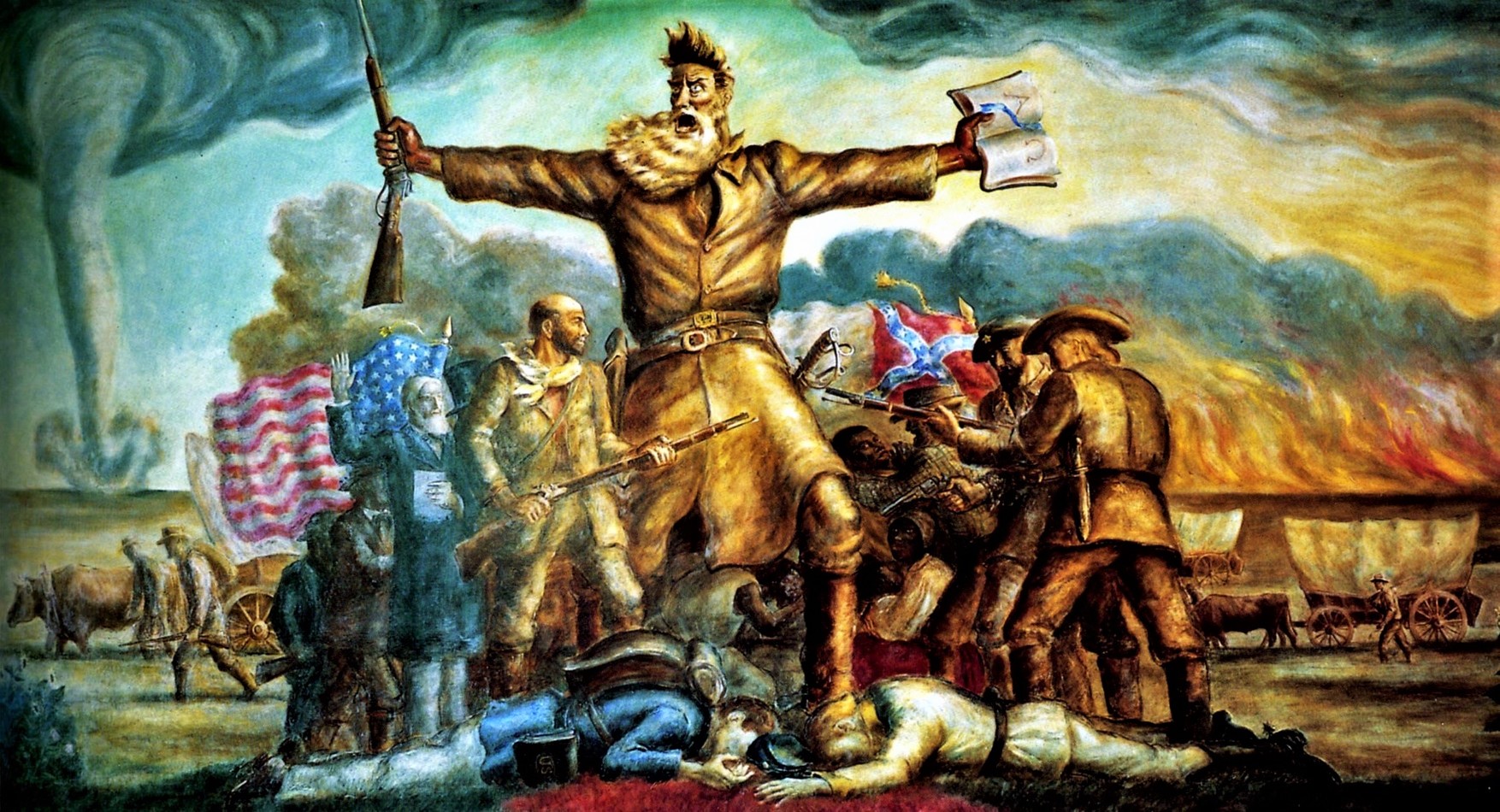
The period now called Bleeding Kansas is one of the most consequential and violent chapters in American history before the Civil War formally began. It was not a single battle but years of raids, killings, retaliations, and political chaos across a territory that the entire country was watching.
The Sacking Of Lawrence, May 21, 1856
Lawrence was the center of Free-State organizing in Kansas Territory. On May 21, 1856, a pro-slavery mob entered the town and systematically destroyed it. They threw the town's two printing presses into the Kansas River, ransacked homes and stores, and burned the home of Free-State Governor Charles Robinson.
The Free-State residents offered no resistance. The financial and symbolic damage was enormous. Lawrence was not simply a town. It was a political statement, and burning it sent an unmistakable message about what the pro-slavery faction was willing to do.
The Pottawatomie Massacre, May 24, 1856
Three days after the sacking of Lawrence, John Brown responded with violence of his own. He led a group of seven men down Pottawatomie Creek and pulled five pro-slavery settlers from their homes. All five were killed.
Free-State leaders did not sanction the attack, and most opposed it openly. But the massacre lit the fuse for four months of retaliatory violence that neither side could fully control.
Four Months Of Organized Violence
What followed was open guerrilla warfare across the territory. Armed bands raided farms, seized supplies, and killed settlers on both sides. Towns like Lawrence and Topeka were kept under effective siege, with food supplies to Free-State settlements deliberately cut off.
When Territorial Governor John Geary arrived in September 1856, he described the scene he found as one of "desolation and ruin," with burning homes and armed partisans bent on "mutual extermination." His intervention ended the worst of the fighting, but Kansas remained volatile through statehood in 1861.
Quantrill's Raid On Lawrence (August 21, 1863)
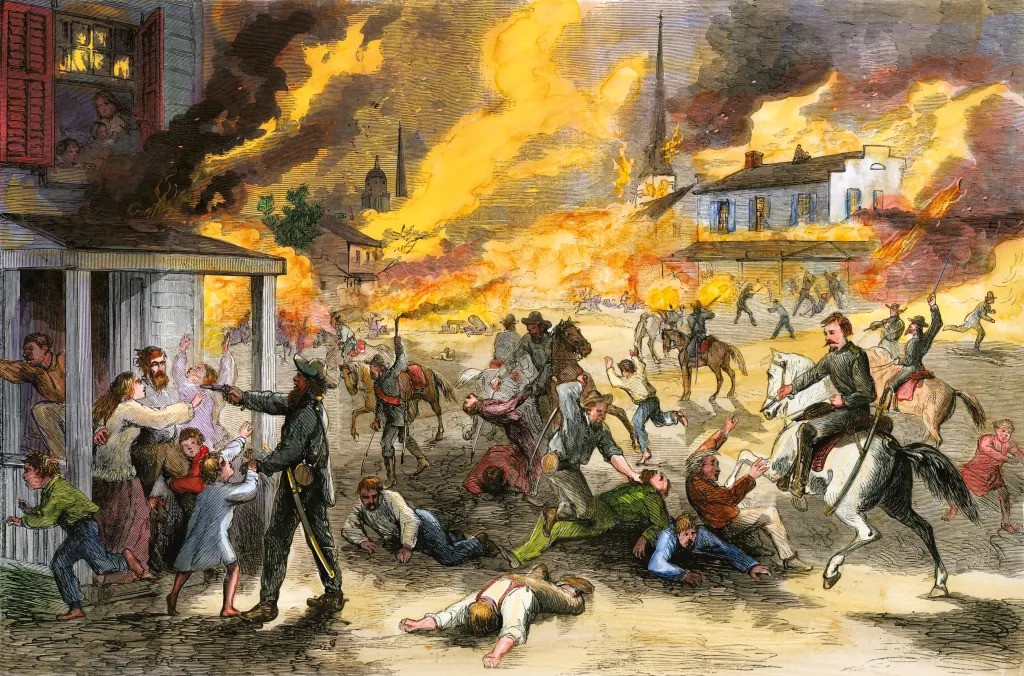
If Bleeding Kansas was a slow-burning catastrophe, Quantrill's Raid was a single morning of concentrated killing that has no rival in Kansas history for deliberate civilian violence.
William Clarke Quantrill was a Confederate guerrilla commander who operated in Missouri and Kansas during the Civil War. His raiders included men who would later become Jesse James and Cole Younger. He had a specific, well-documented hatred for Lawrence, which had remained the symbol of Free-State Kansas since the 1850s.
Quantrill led approximately 450 men into Lawrence before dawn. They moved through the town systematically, targeting men and boys specifically. According to records maintained by the Kansas State Historical Society, approximately 150 civilians were killed, nearly all of them unarmed.
Women and children were largely spared by Quantrill's orders. Most of the town's buildings were burned to the ground. By the time Union forces could respond, Quantrill's men had retreated into Missouri. Lawrence was left in ruins, and the raid stands as one of the worst civilian massacres of the entire Civil War.
The raid triggered Order No. 11, a federal directive that forcibly depopulated several Missouri border counties in retaliation. It hardened Kansas's political alignment in ways that persisted for generations. A historical marker in Lawrence still commemorates the victims today.
Quantrill's Raid did not just destroy a town. It became the defining atrocity of the Civil War's western theater and the reason Lawrence carries a particular weight in Kansas history that other cities do not.
The Blizzard Of 1886
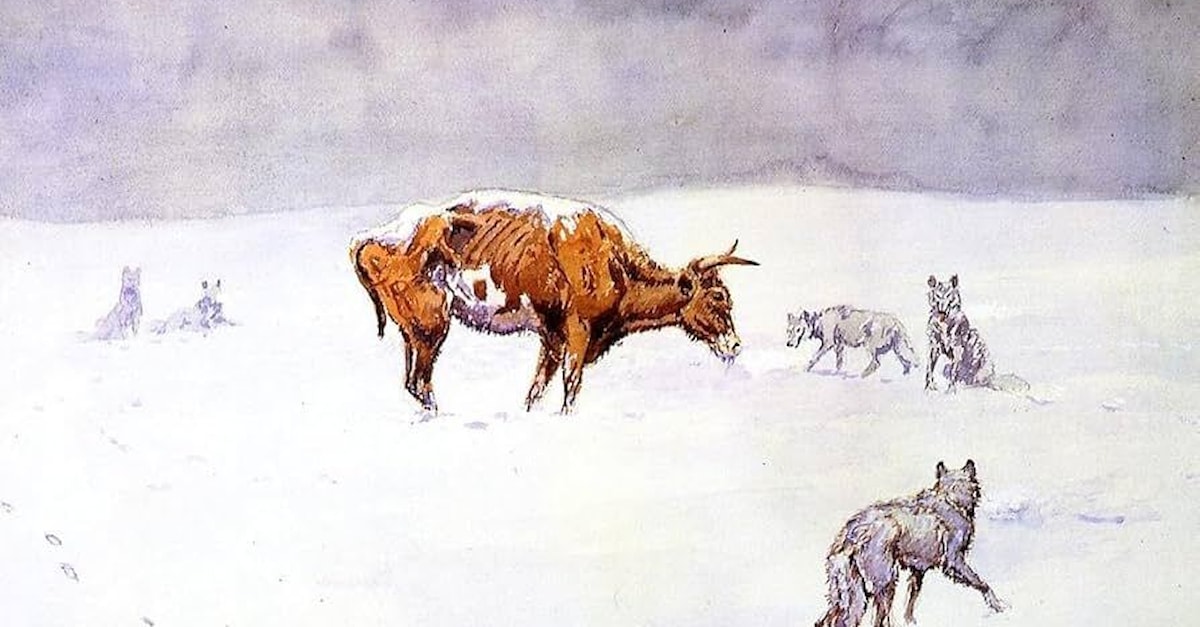
By the mid-1880s, western Kansas had a booming open-range cattle industry. Then two blizzards arrived in rapid succession in January 1886, and the industry was dismantled almost completely within weeks.
Two Storms That Struck Without Warning
The winter leading into 1886 had been mild, and ranchers had not built up the feed stores needed for a hard winter. Then, on December 31, 1885, temperatures dropped sharply and snow began falling across western Kansas. A first blizzard struck around January 1, 1886, followed by a second and more severe storm on January 6.
National Weather Service records document that the second storm drove temperatures to 16 degrees below zero Fahrenheit near Dodge City. Winds howled for days. Snow drifted across roads, railroads, and open grazing land. Telegraphic communication went down across the region. People who had been outside simply could not find their way home.
The Human And Economic Toll
Up to 100 people died in the storms, and two young women in Clark County froze to death while trying to reach a neighbor's house for shelter. Travelers on the open prairie disappeared entirely into the whiteout conditions.
The cattle losses were staggering. Historical accounts held by the Kansas State Historical Society indicate that between 75 and 90 percent of cattle in western Kansas died during the storms. Ranching fortunes built over the years were erased in days. The open-range cattle industry, already under pressure from expanding settlement and barbed-wire fencing, never fully recovered in Kansas after 1886.
The Rocky Mountain Locust Swarm Of 1875

In August 1875, a swarm of Rocky Mountain locusts descended on Kansas and surrounding states, covering an estimated 198,000 square miles. The swarm contained trillions of insects and remains the largest recorded insect swarm in scientific history. Witnesses described the noise of landing locusts as a constant, overwhelming hiss audible from miles away.
Within hours of landing, entire fields were stripped down to bare stems. Crops that had taken months to grow were reduced to nothing by nightfall. The weight of the insects on the telegraph wires was enough to snap them.
For farm families already living close to the margin in the settlement era, the swarm was a catastrophe. Winter food stores were gone. There was no crop to sell and no quick way to replant. Many families abandoned their homesteads entirely.
The Rocky Mountain locust continued causing periodic devastation across the Great Plains through the 1870s before going extinct in the early 1900s, leaving behind no natural successor capable of causing damage on that scale again.
Camp Funston And The 1918 Spanish Flu
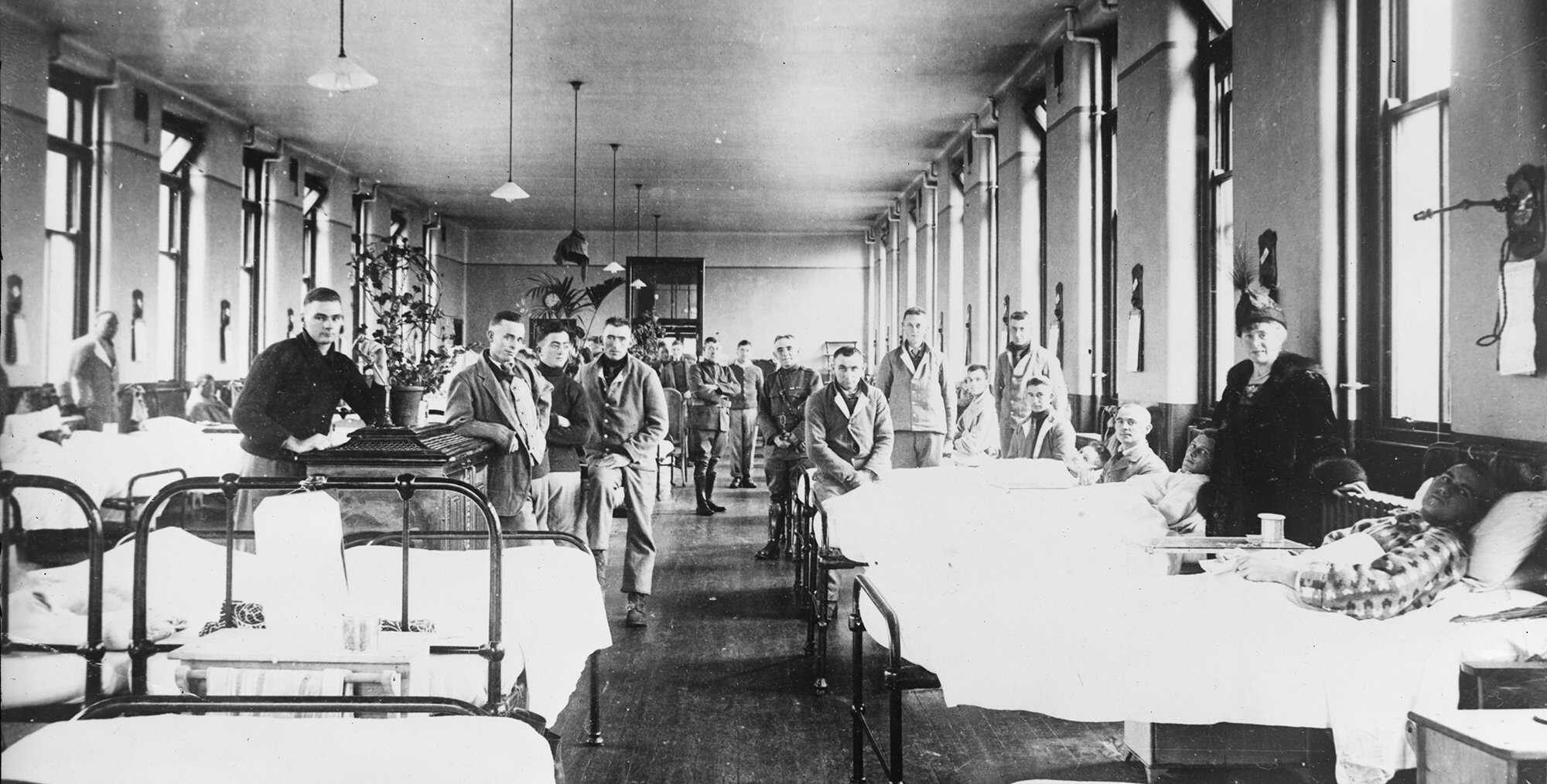
Camp Funston was a major U.S. Army training facility at Fort Riley in north-central Kansas. In early 1918, it housed tens of thousands of soldiers preparing to ship out to World War I. On March 4, 1918, the camp's cook reported to the infirmary with symptoms of a severe respiratory illness.
Within days, hundreds of soldiers were sick. Within weeks, the disease had spread to military installations across the United States. Within months, it was in Europe, carried by American troops heading to the front lines.
The 1918 influenza pandemic killed an estimated 50 to 100 million people worldwide, according to the CDC. Whether Camp Funston was the definitive origin point is still debated by historians and epidemiologists, but it is one of the earliest and best-documented outbreak clusters on record.
In Kansas specifically, the flu killed thousands of civilians. Schools, churches, and public gatherings were shut down across the state. Rural communities with limited medical access were hit particularly hard. For a state already strained by the economic demands of the war, the pandemic was one blow too many for hundreds of small farming communities. Today, Camp Funston is often included in a Kansas history event calendar because of its documented role in one of the most consequential public health crises of the twentieth century.https://dateshijri.com/
Read Also: Horror Movies Set In Kansas
The Dust Bowl (1930 To 1939)
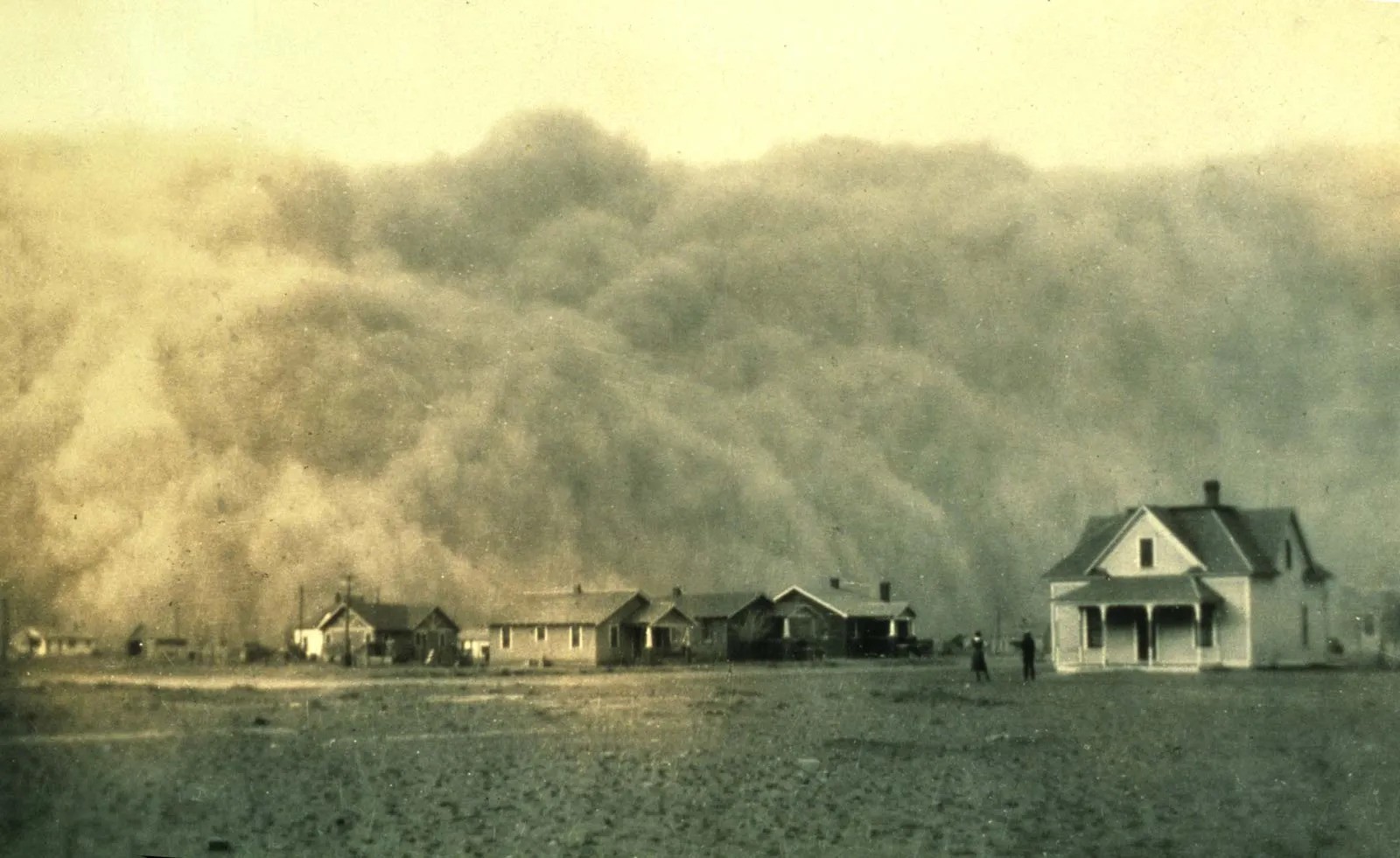
The Dust Bowl is the event most people associate with this era of Great Plains history, but its specific and devastating impact on Kansas is routinely understated. This was not simply a drought. It was the result of decades of agricultural practices that had stripped the land of its natural defenses long before the rains stopped.
Throughout the late 1800s and early 1900s, settlers plowed up the native grasses that had anchored the topsoil of the Great Plains for thousands of years, replacing them with wheat and other crops. When a severe drought hit in the early 1930s and those crops failed, there was nothing holding the soil in place.
The USDA later estimated that the southern Great Plains lost an average of 480 tons of topsoil per acre during the worst years. In Kansas, entire farms were buried under drifting dirt. Fields that had produced wheat for decades simply vanished under sand and dust.
Black Sunday, April 14, 1935
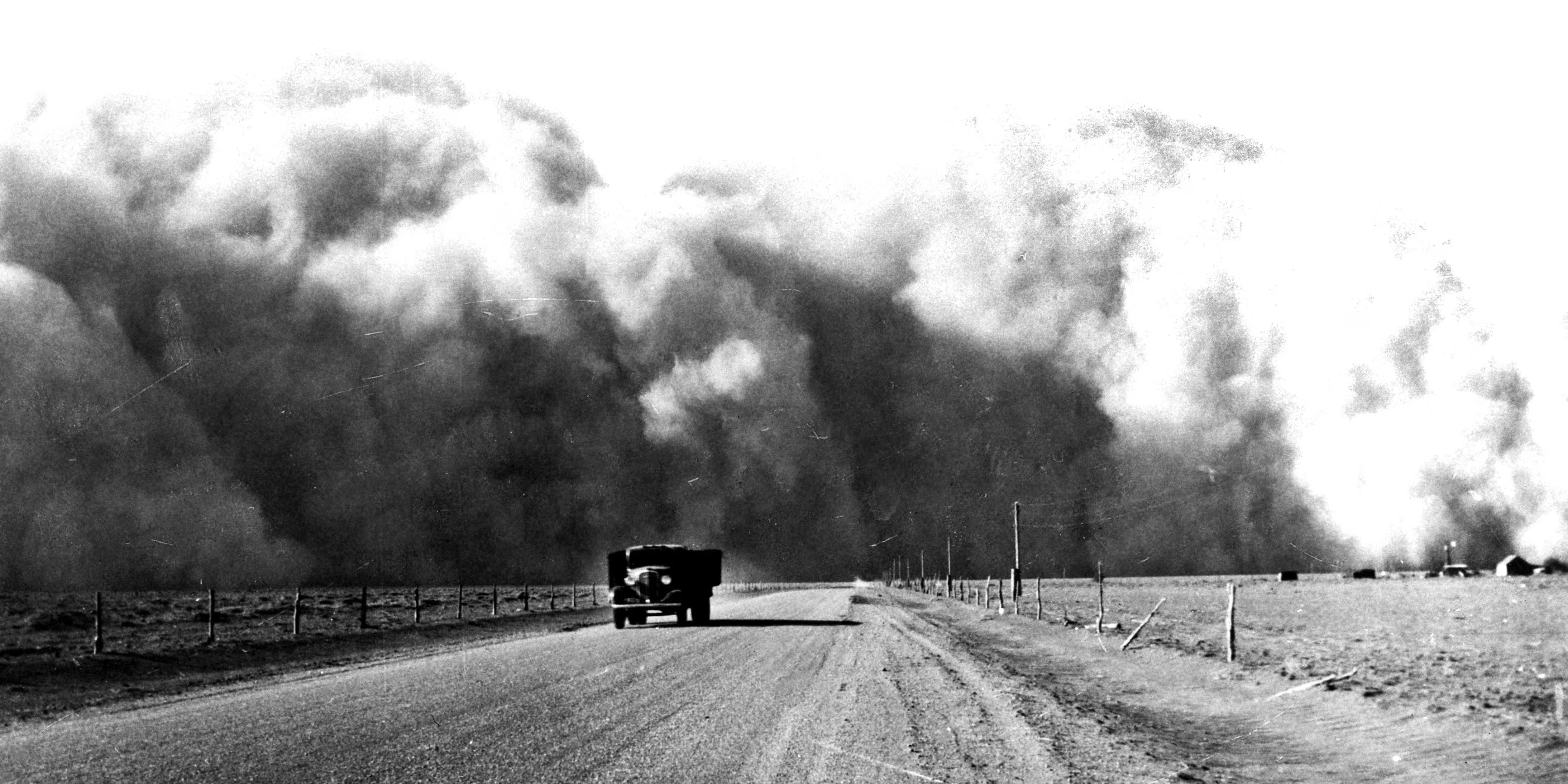
The single worst day of the Dust Bowl era came on April 14, 1935. Winds reaching 60 miles per hour swept across the region, lifting walls of topsoil that reached miles into the sky and turning the afternoon into complete darkness across parts of Kansas and Oklahoma.
Witnesses described the storm as a rolling black wall moving across the plains. People caught outside could not breathe. Livestock suffocated in the fields. The day became known as Black Sunday, and it remains the defining image of the Dust Bowl era in popular memory.
By 1940, an estimated 2.5 million people had left the Dust Bowl region. Kansas lost a significant portion of its rural population during this period. Families who had homesteaded for generations packed their belongings and left for California or wherever there was any prospect of work or rain.
Depression-era poverty hit Kansas farming communities with particular force, and the psychological damage of watching everything you had built literally blow away was immense and often permanent.
How Kansas Came Back
Recovery was slow and required federal intervention on a scale the country had not seen before. New Deal programs provided emergency relief. The USDA's Soil Conservation Service introduced farming techniques designed to protect topsoil and prevent erosion. The Great Plains Shelterbelt project planted rows of trees across the region to break the prevailing winds.
Rainfall returned to most of Kansas by the early 1940s. The combination of federal investment and changed farming practices gradually stabilized the land. The lessons forced on Kansas by the Dust Bowl became the foundation of modern American agricultural conservation policy.
The Great Flood Of 1951
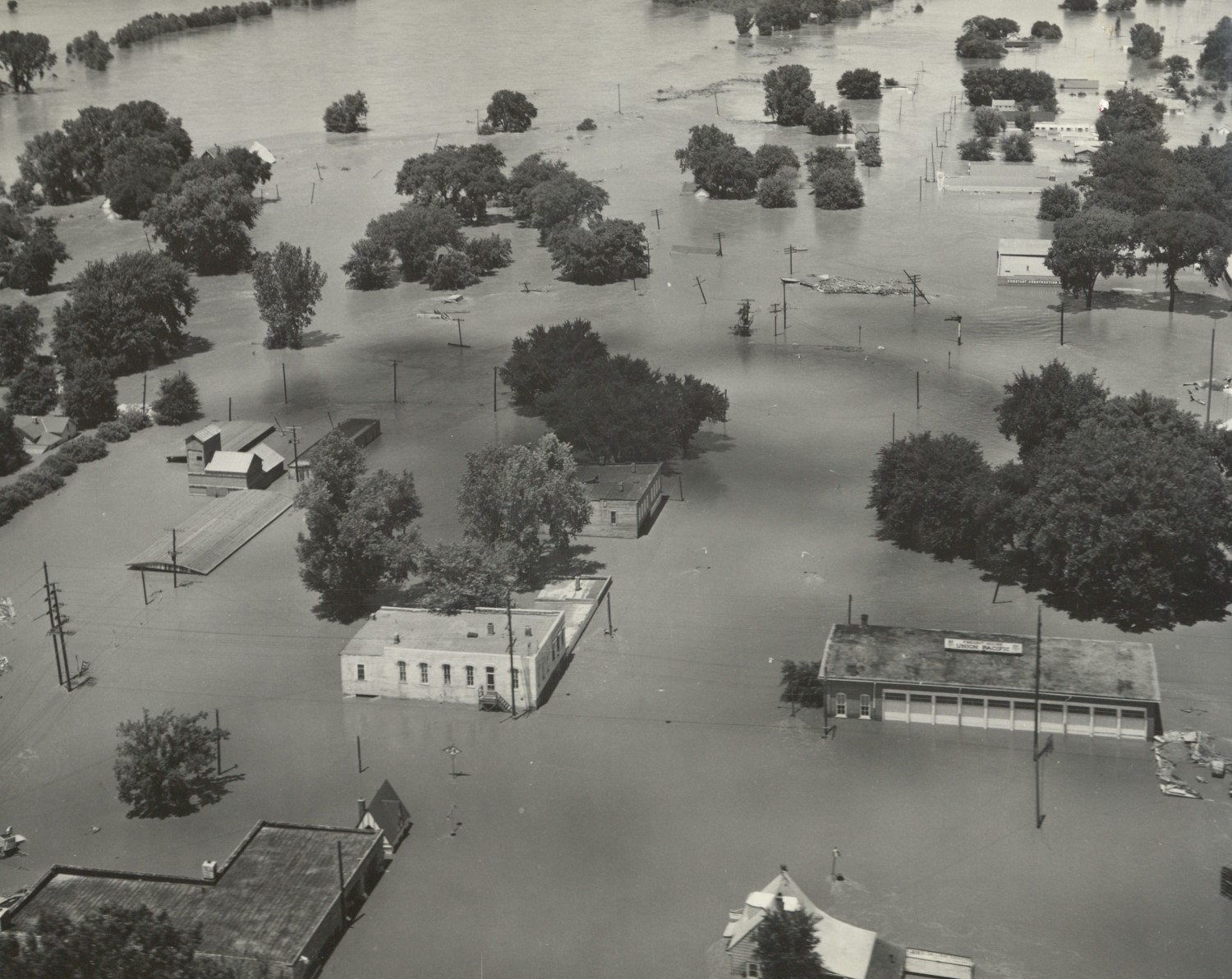
Heavy rains throughout June and July 1951 saturated the ground across eastern Kansas. When the Kansas and Neosho rivers broke their banks, the floodwaters moved through a corridor stretching from Manhattan through Topeka and Lawrence and into Kansas City. Entire neighborhoods and industrial districts were buried under feet of water.
The flood developed faster than existing infrastructure could handle. Communities had limited time to prepare, and the levee and reservoir systems of the time were simply not built for water at that volume.
The Great Flood of 1951 caused approximately $935 million in damage at the time, a figure equivalent to more than $10 billion today. Seventeen people died directly from the flooding, a remarkably low number given the scale of inundation, and tens of thousands were displaced from their homes.
The 1951 flood directly triggered a major overhaul of federal flood control policy in Kansas. The reservoirs and levee systems constructed in the years that followed played a direct role in limiting destruction when another major flood struck in 1993.
Kansas Tornadoes - Two Storms That Define State History
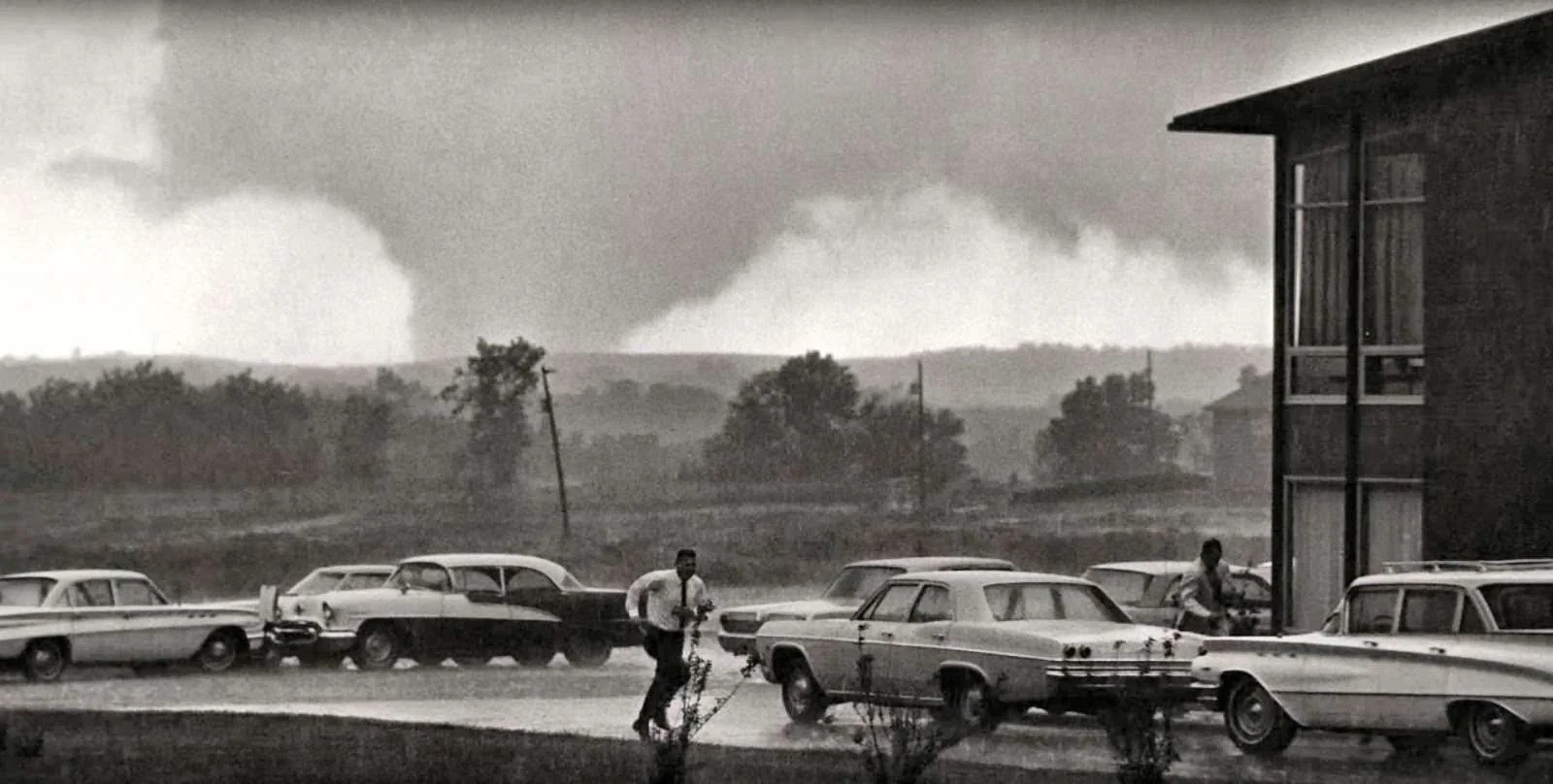
Kansas sits in Tornado Alley, and hundreds of tornadoes have touched down across the state over the decades. Two of them stand entirely apart for their scale and their lasting consequences.
The 1966 Topeka Tornado
On June 8, 1966, an F5 tornado cut through Topeka in the late afternoon, carving a path more than a mile wide through the capital city. Sixteen people were killed, and hundreds more were injured.
At the time, the storm caused approximately $100 million in damage, making it the most expensive tornado in U.S. history up to that point. More than 800 homes were destroyed, and thousands more were damaged. It was a storm that proved no Kansas City, regardless of size or status, was immune.
The Greensburg EF5 Tornado Of 2007
On May 4, 2007, an EF5 tornado with winds exceeding 200 miles per hour struck the small town of Greensburg in southwestern Kansas. The storm was 1.7 miles wide at its peak and remained on the ground for more than 20 miles.
The tornado leveled 95 percent of Greensburg. Eleven people died, and 216 were injured. The town of approximately 1,500 residents was fully evacuated and declared unsafe. It was one of the most destructive of any American communities by a natural disaster in the modern era.
Rather than simply rebuilding what had been lost, Greensburg chose to reconstruct as a model of sustainable design. Nearly all of the town's new public buildings were built to LEED Platinum certification standards. Greensburg became one of the greenest small cities in the United States. Its population is smaller than before the tornado, but the town's rebuilding process attracted national attention and became a reference point for how communities can respond to total loss.
The BTK Murders (1974 To 2005)
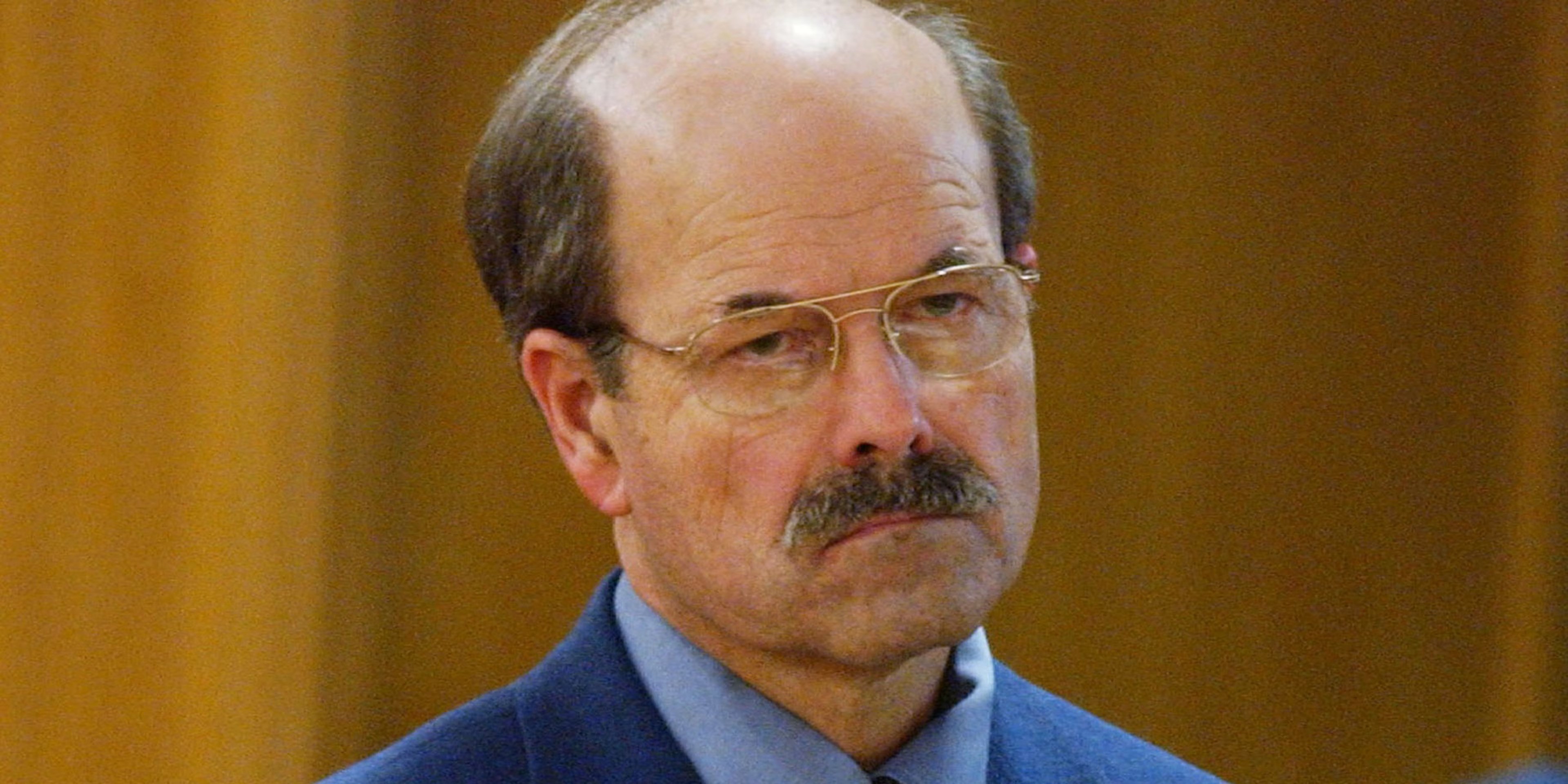
The BTK case is the darkest chapter in modern Kansas history. It is not a weather event or a war. It is the story of a man who lived as a normal community member while killing his neighbors for decades, and a city that had to keep living with the uncertainty that brings.
Dennis Rader murdered 10 people in the Wichita area between 1974 and 1991. He named himself BTK, for "Bind, Torture, Kill," and sent taunting letters and packages to police and local newspapers during the active years of the murders. Then he went silent for long stretches.
The Wichita Police Department pursued the case for decades without success. For residents during those years, BTK created a persistent and low-level fear that never fully went away, even between killings. Parents changed how they talked to their children about safety. Neighbors viewed each other with a wariness that had not been there before. The city was altered by it in ways that are hard to quantify.
The most bitter irony of the BTK case is that Rader was not caught by superior detective work, but by his own ego. After over a decade of silence, his need for attention outweighed his need for freedom. In a final exchange with investigators in 2004, he famously asked if a floppy disk could be traced. The police, seizing their moment, told him it could not. He believed them.
When the digital trail led police to Christ Lutheran Church, the image of the "BTK Strangler" shattered. He was a church president, a city compliance officer for Park City, and a married father. He was arrested in February 2005.
Today, Rader remains incarcerated at the El Dorado Correctional Facility. Because Kansas had no death penalty at the time his crimes were committed, he is serving 10 consecutive life sentences.
The closure of the case in 2005 brought a collective exhale to the state of Kansas, but the scars remain. The BTK era changed the DNA of Wichita, transforming it from a trusting Midwestern hub into a city that understands, perhaps better than any other, that the greatest dangers often wear the most ordinary masks. The "low-level fear" that gripped the city for thirty years has faded, replaced by a somber history lesson
What These Dark Chapters Have In Common
Looking across the full span of these events, a pattern is visible. Several of Kansas's worst disasters were made significantly more destructive by decisions made long before the crisis arrived. Overgrazing and lack of preparation amplified the Blizzard of 1886. Decades of overplowing made the Dust Bowl catastrophic rather than merely severe. Inadequate flood infrastructure magnified the 1951 damage in ways that later federal investment was explicitly designed to prevent.
The political violence of the 1850s and 1860s was the direct product of a national policy failure that placed an impossible question onto one territory without any real mechanism for resolution.
What Kansas also shows, consistently, is a capacity to adapt after catastrophe. The Dust Bowl reshaped American agricultural policy permanently. The 1951 flood rebuilt the state's water management infrastructure. Greensburg became a national model for post-disaster reconstruction. The BTK case changed how Kansas law enforcement agencies share information across jurisdictions and preserve evidence over long timelines.
The darkest days in Kansas history did not have the final word. But they left marks that are still visible in the landscape, the laws, and the memory of the people who live there.
Frequently Asked Questions
How Many People Were Killed During The Bleeding Kansas Conflict?
Historical estimates range from 55 to 200 deaths, and that range reflects a real gap in the records rather than scholarly disagreement. Many deaths occurred in remote areas with no formal documentation, and both sides had reasons to overstate or understate casualties for political purposes.
Has The BTK Case Changed How Kansas Investigates Serious Crimes?
The BTK investigation revealed significant gaps in how different Kansas law enforcement agencies shared information across jurisdictions and over long time spans. The case contributed to the development of more coordinated cold case protocols and improved evidence preservation standards in Kansas and influenced similar policy discussions in other states dealing with long-unsolved violent crimes.
What Happened To John Brown After He Left Kansas?
John Brown left Kansas in 1859 and led the famous raid on the federal arsenal at Harpers Ferry in Virginia, attempting to trigger a slave uprising. The raid failed.
Final Thoughts
Kansas's dark history is not a collection of unrelated bad events. It is a pattern of a state repeatedly tested by forces it did not choose and often could not stop, whether the trigger was national political failure, environmental mismanagement, catastrophic weather, or a single individual's capacity for violence.
The darkest days in Kansas history are worth knowing, not because they are grim, but because they explain what the state became and how it got there. That is a story with enough complexity and consequence to be worth taking seriously.
You Might Also Like: Kansas Supernatural Events
Jump to
A Few Things Worth Knowing Before You Read On
The Background That Made Kansas A Flashpoint
Bleeding Kansas (1854 To 1861)
Quantrill's Raid On Lawrence (August 21, 1863)
The Blizzard Of 1886
The Rocky Mountain Locust Swarm Of 1875
Camp Funston And The 1918 Spanish Flu
The Dust Bowl (1930 To 1939)
The Great Flood Of 1951
Kansas Tornadoes - Two Storms That Define State History
The BTK Murders (1974 To 2005)
What These Dark Chapters Have In Common
Frequently Asked Questions
Final Thoughts

Mia Thompson
Author
Mia Thompson is a versatile writer at Kansas Press, delving into a range of topics including news, spiritual exploration, astrology, and numerology. With a passion for delivering insightful and informative content, Mia's articles provide readers with valuable perspectives and thought-provoking insights into these intriguing subjects.
She is dedicated to creating content that resonates with readers and fosters a deeper understanding of complex topics.

Calvin Penwell
Reviewer
Since diving into numerology in 1997, my path has been marked by extraordinary encounters and insights. A pivotal moment was uncovering a forgotten numerological manuscript in a tucked-away Italian library, which deepened my connection to the ancient wisdom of numbers. Another transformative experience was a meditation retreat in Nepal's tranquil mountains, where I honed my intuition and the art of interpreting numerical vibrations.
These adventures have not only enriched my numerological practice but also my ability to guide others towards understanding their destiny and life's purpose. My approach is deeply personal, rooted in a blend of historical knowledge and intuitive insight, aimed at helping individuals find their alignment with the universe's abundant energies. My mission is simple: to share the power of numerology in illuminating paths to abundance and fulfillment.
Latest Articles
Popular Articles